21 Jun 2026
Nerang Gold Coast, QLD
Teams of 2 from beginners to elites
NOVICE course - 2-4 hours
CLASSIC course - 3-6 hours
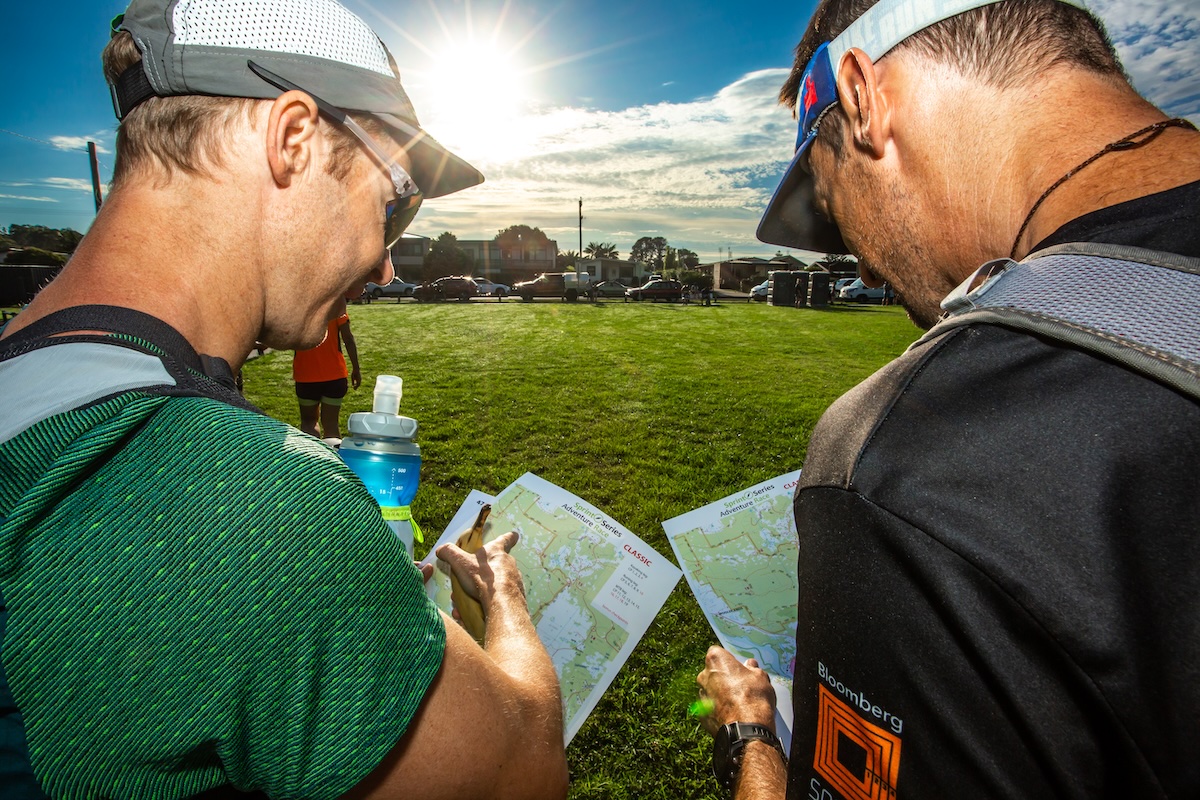
Navigation is often the greatest challenge in adventure racing. While physical fitness can carry you through trekking, paddling, and biking, the ability to read a map, follow a compass, and make smart route choices is what separates the top teams from the rest. If you want to improve quickly, these 10 tips will help you become a confident navigator in any terrain.
Take the time to study the map before starting the race or a leg of the course. Look at contour lines, water features, vegetation, trails, and man-made structures. Identify potential obstacles (major water bodies, fences, private properties, large terrain features) and plan your route. A quick glance at the map while running can save valuable time — but only if you’ve already read it thoroughly beforehand. Use texters to mark your planned route. The more time you spend before the race studying your map, the less time you will need to watch it during the event.
The maps can be very different. Make sure you know the symbols used in this specific event.
A compass is your most reliable tool when visibility is poor or terrain is confusing. Practice:
Taking bearings accurately
Following bearing through bush or uneven terrain
Converting map angles into compass bearings
Knowing how to use a compass confidently means you won’t waste time second-guessing your direction.
The maps can have magnetic declination or be aligned to magnetic north. Make sure you double-check that.
Even experienced teams get lost. Learn techniques to re-establish your position when unsure:
Identify recognizable major terrain features (major terrain feature is the best.)
Use attack points: a nearby obvious feature to guide you.
Double-check your estimated distance travelled
Quick relocation prevents small errors from turning into major detours.
Rather than aiming for the exact checkpoint directly, pick a nearby, obvious feature (like a stream, or trail junction) and navigate to it first. From there, you can approach the checkpoint with confidence, reducing the risk of overshooting or wandering.
Navigation is not just about maps — it’s about interpreting the land around you. Practice identifying:
Ridges, gullies, and contour changes
Being able to “see the map on the ground” makes navigation faster and more intuitive especially when roads are not accurately marked.
Don’t wait until you’re unsure to pull out the map. Make it a habit to check your position regularly as you move. Frequent map reading keeps you on track, reduces errors, and builds confidence. Fold a map so you can only see the leg between current checkpoint and next checkpoint. Keep your thumb in the place where you are.
Use a mapboard for the mountain bike navigation.
If racing with a teammate, assign roles:
One person focuses on map reading and route planning
The other monitors pace, distance, and look for features.
Clear roles prevent confusion and help teams make faster, smarter navigation decisions.
Nothing beats practice. Simulate race scenarios by:
Practising navigation in dense bush or unfamiliar terrain
Timing yourself to add pressure
Trying night or low-visibility navigation
Regular training reduces panic and builds muscle memory for decision-making.
Rogaining and orienteering events are great for fine-tuning your skills.
Rushing is a common cause of mistakes. Learn to adjust your pace based on terrain and navigation complexity:
Slow down in tricky areas
Move faster on clear paths or when the route is obvious
Avoid re-routing unless necessary
This balance saves time over the whole course.
After each navigation session, review:
Mistakes made and why
Route choices and alternatives
Successful strategies to repeat
Reflection accelerates learning and ensures continuous improvement.
Start small. Even 30 minutes of focused navigation practice a week can dramatically improve your skills. Combine other events maps study, compass drills, and real-world terrain exercises — you’ll notice the difference in your next adventure race.
Navigation is a skill that separates the winners from the rest in adventure racing. By practising deliberately, understanding the terrain, and using smart strategies, you can drastically reduce mistakes and move through courses with confidence. Start implementing these tips today, and you’ll see rapid improvement — often within just a few weeks.

Mobile: +61455570487
Mobile: +61466968184